The SAS Doctors Handbook
A Practical Guide to Careers, Contracts and Professional Life in the NHS
News, analysis and practical resources for specialty, specialist, associate specialist and locally employed doctors.
New here? Explore the reader guide →Choose the closest starting point. This directs you to relevant information; it does not assess an individual case.
Map your contribution, save an editable career plan and download a PDF meeting brief.
Open this route →Use the handbook and video, then bring your questions to Christine.
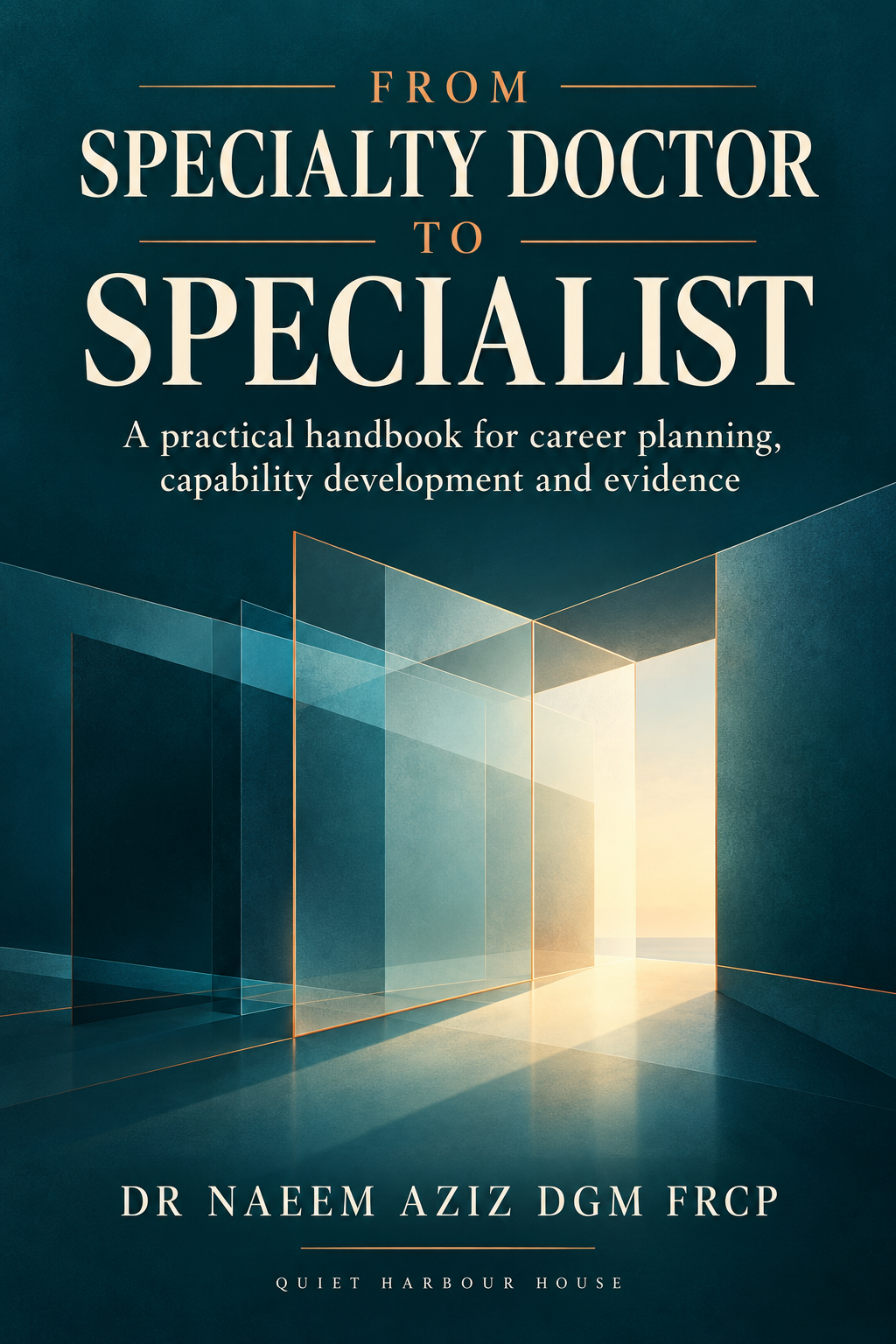
Make sense of your starting position. Plan development, document existing capability and prepare for a Specialist SAS role.
19 chapters · 12 practical tools · Open online reading
Explore your next career step, prepare for a job-plan discussion, organise appraisal evidence or find relevant learning. Christine draws on SAS Doctors, selected ClinicalEdu material and official guidance.
Two introductory questions, then six more after email verification. No user account, membership or password needed.
AI can make mistakes. Educational support only; check important points against original sources and local policy.
Revisit published material and time-limited opportunities while they remain available.
Start with the issue in front of you, then move between programmes where topics overlap.
19 chapters, 12 tools and the preserved PDF and EPUB editions.
Open →Ongoing professional practiceTwelve modules, evidence mapping, feedback planning and a practical PDP builder.
Open →NHS entry & careersTwelve chapters from UK entry to senior career development.
Open →Applied learningTwelve modules, practical tools and knowledge checks.
Open →Specialist registrationTwelve modules from career choice and curriculum mapping to submission and outcome.
Open →Professional infrastructureTwelve modules covering terms, job plans, pay, safe work and NHS pensions.
Open →Workplace supportWellbeing, bullying, discrimination, speaking up and recovery.
Open →Formal processesComplaints, investigations, GMC, MPTS and employment routes.
Open →Organisational supportRole, boundaries, confidentiality and effective signposting.
Open →Nation-specificEngland, Scotland, Wales and Northern Ireland systems, terms, support and SAS Charters.
Open →Free courses and individual modules for SAS doctors, consultants, locally employed doctors, nurses, allied health professionals, pharmacists, students and anyone interested in healthcare learning.
Browse published learning without an account. No course fees or subscription.Recognition, clinical reasoning and care for people living with frailty.
Explore the course ↗10 modulesBring assessment, rehabilitation and coordinated care planning together.
Explore the course ↗Published and forthcoming books connected to SAS careers, workforce recognition and medical leadership.
The SAS Doctors Handbook covers careers, contracts and professional life across the NHS. From Specialty Doctor to Specialist focuses on planning and preparing for a Specialist SAS role.
A Practical Guide to Careers, Contracts and Professional Life in the NHS
A Practical Career Guide for International, Locally Employed and SAS Doctors in the NHS
How the NHS Fails to See Its Medical Workforce—and What Careful Leadership Requires
A Practical Guide for SAS Doctors and New Consultants in the NHS
How NHS Services Outgrow the Plans Meant to Keep Patients and Staff Safe
Online editions and free samples open in a separate tab. Forthcoming titles are labelled without an estimated publication date.
A new independent publication for news, careful analysis and practical professional resources for SAS and locally employed doctors.
The SAS workforce includes doctors at markedly different stages of experience, responsibility and autonomous practice. Describing it accurately matters.
Leadership development should connect practical opportunity, organisational support and the authority to improve services.
Explore Newtown, Llandrindod Wells and Brecon. Find hospital information, local letting agents, transport, schools, GP registration and a practical arrival checklist—for doctors, healthcare colleagues and their families.
Living & working in Powys →